
Watch Your Steps
Kōdō Sawaki — Zen Talks
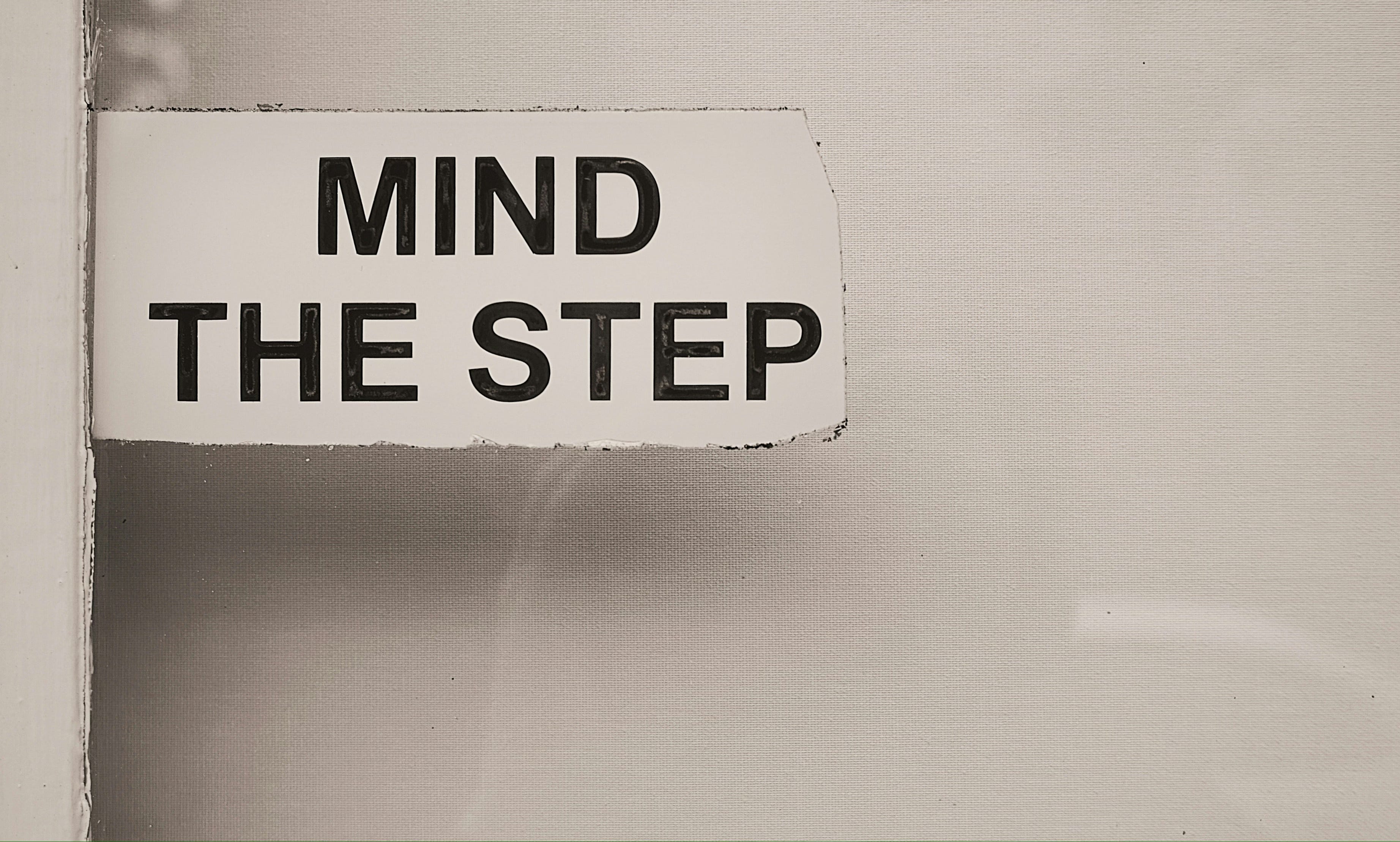
Among Zen monks there is a saying: “watch your steps.” It means to shine the light on your own feet, to look back at your own footing. Put even more bluntly, it means: “And what about you?” So this phrase, “watch your steps,” means to keep returning again and again to your own life. For that, there must be a great mirror. One must constantly reflect oneself in that mirror and look. In the hells, it is the Mirror of Retribution.
When you look at pictures of hell and the Pure Land, you often see scenes where the officials seize the dead and force them to look into a mirror. In that mirror appears the image of them trying to run away with stolen goods. That mirror is precisely the karmic mirror we ourselves possess. Each person carries it with them. And it reflects the karma corresponding to each person’s own state of being. In technical Buddhist terms, this is what is called the eighth consciousness, the store-consciousness.
Within that mirror, where is the world in which nothing at all is reflected? Where could such a world possibly be? That world in which nothing is reflected is the world of enlightenment, the world of zazen. With each outgoing breath and each incoming breath — when the breath goes out, it is simply the outgoing breath; when the breath comes in, it is simply the incoming breath — moment after moment, without interruption, one turns the light inward, steadily looking into one’s true self. It is precisely this point that is spoken of in the Universally Recommended Instructions for Zazen (Jpn. Fukanzazengi). There it says:
“Therefore, put aside the intellectual practice of investigating words and chasing phrases, and learn to take the backward step that turns the light and shines it inward.”1
People are very apt to settle everything with words. They spend their whole lives with nothing but words.
When I was young, I once heard a story from a priest of the Pure Land sect. A certain eminent scholar-priest, at the moment of his death, is said to have said, “I have wasted my whole life on useless things. You must not do such trivial things as I have done.”
Scholars often end up like that. You may stuff your head with learning as if it were your profession, memorizing great heaps of it, but it amounts to nothing. You may learn the Chinese character for “fire,” yet it has nothing to do with actual fire. You may know the word “water,” yet it has nothing to do with water. And even if you write the character “enlightenment” beautifully in the style of Wang Xizhi, it still has nothing to do with enlightenment whatsoever. That’s why instead of doing such useless things and “cease the intellectual practice of pursuing words and following after phrases,” and instead “learn the backward step of turning the light and shine it inward.”
This “backward step of turning the light and shining it inward” means nothing other than practicing zazen correctly. There is no need to fuss over the meanings of characters or to parade scriptural sources. As Zen Master Hongzhi (Jpn. Wanshi) also said, “Step back and return to yourself.”2 Therefore, one must make the effort to become intimate with oneself. Accordingly, the thing we must strive for above all is to learn this backward step of turning the light and shining it inward. At all times and in every situation—whatever the circumstance—this effort is required.
This may be a bit indelicate, but you can understand it even from something as simple as taking a piss. There was a fellow who had his hair slicked down with pomade and neatly parted, wore a fine necktie, and had a jeweled pin stuck in it. Sitting there in great style, looking as though he were the greatest ladies’ man alive. Before long he got up to go to the toilet. And this toilet, mind you, was a splendid one, lined with fine cypress boards. When the fellow came out, the maid went in to inspect it. If it had been dirtied, she had to clean it up before the lady of the house saw it and scolded her. When she went in, the place was splashed and dribbling all over. Naturally the maid began grumbling under her breath, and the fine gentleman’s good looks were completely spoiled. The reason for this is simple: even when taking a piss, he had never learned the backward step of turning the light and shining it inward.
Even while pompously preaching Zen with the tip of their tongue, they kick off their wooden clogs and send them flying six or seven inches away. Other people’s clogs they leave overturned and smeared with mud. That too is proof that they have not sufficiently learned how to turn the light inward. Whether riding a streetcar or taking a train, one must learn this backward step of turning the light and shining it inward.
As it is said [in the Lotus Sutra], “The Way is near.” One must begin by applying oneself right at one’s own feet. Wherever one applies this effort, there is the Way. That is why even something as simple as clearing one’s throat has its proper way of being done. In short, if one must learn the backward step of turning the light and shining it inward throughout the whole of one’s life, then the whole of life becomes the true gate of zazen.
It is said, “How could that be limited to sitting or lying down?”3 Yet in this world it is proper to begin one’s effort from the main gate. And this main gate is zazen.
Translated by Taigen Dan Leighton and Shōhaku Okumura.
(CBETA 2025.R3, T48, no. 2001).
Cf. Taigen Dan Leighton and Shōhaku Okumura’s translation of Fukanzazengi.