
Seek Thyself
Kōdō Sawaki — Zen Talks
To know what is enough means to cut off before and after and become completely that. A flower is all flower; a fruit is all fruit. A flower is not a flower merely in order to bear fruit. When it is a flower, it is the whole flower. Nor is the fruit the end of the flower. When it is fruit, it is the whole fruit.
One does not work for the sake of a monthly salary. When it is time to work, be entirely work—become the work itself. Work for the sake of work. If it is like that, there will be no room for complaints such as:
“I worked this hard, and this miserable pay is all I get!”
Study, too, and practice, too, must be samādhi in study and samādhi in practice. Not study for the sake of examinations, nor study for the sake of getting a job. And practice is not for the sake of going to heaven, nor for the sake of attaining enlightenment.
Buddhism is not talking about the future, nor is it talking about the past. It does not say, “Because you were a thief in the past, you cannot become an honest man now.”
It tells you to look straight at the present. To value the mind as it is now. Therein abides the great, universal Life.
When it is said that the Buddha practiced austerities, those austerities were undertaken in order to become completely himself. They were not done with the thought of enjoying comfort in the future. First of all, one must settle firmly into this self and become it completely.
At one time the Buddha was sitting in zazen. Just then there was a village nearby where some thirty men lived, each with his wife. Among them there was one fellow who had no wife; but from somewhere he brought in a suspicious-looking woman and passed her off as his wife.
But that woman secretly conspired with a rogue, stole the man’s property, and ran away. The fellow was stunned. He hurried at once to tell the villagers. That was enough to set things off. The thirty men of the village each grabbed a club, shouting, “Let’s go!” and rushed out in a noisy chase. They chased on and on, until they entered a grove. There sat the Buddha, immovably in zazen.
One of the men stepped forward and asked,
“Excuse me, sir, but did you happen to see a man and a woman pass by just now, carrying some baggage as they fled?”
But the Buddha said,
“Rather than seeking the woman who has run away, seek your own selves.”
Then, it is said, he went on to press the point and gave a sermon on seeking one’s own self.
As I always say, zazen is a matter of becoming intimate with oneself. They say that learning the Buddha Way is difficult. But that is only because knowing oneself is difficult. To memorize Zen sayings or teachings—that is an easy enough thing.
What is this self, after all?
What sort of thing am I?
That is what people cannot quite grasp. And to come to know it, practice is indispensable. Zazen is necessary in order to become intimate with oneself.
In the Nirvana Sūtra it says:
“When both arising and ceasing are extinguished, one takes peace as one’s joy.”
Where arising and ceasing are both brought to an end, both chasing and fleeing come to an end together. There, at that point, is the final peace, the ultimate ease.. But people try to think about this only on the level of ideas—that is why it seems so difficult.
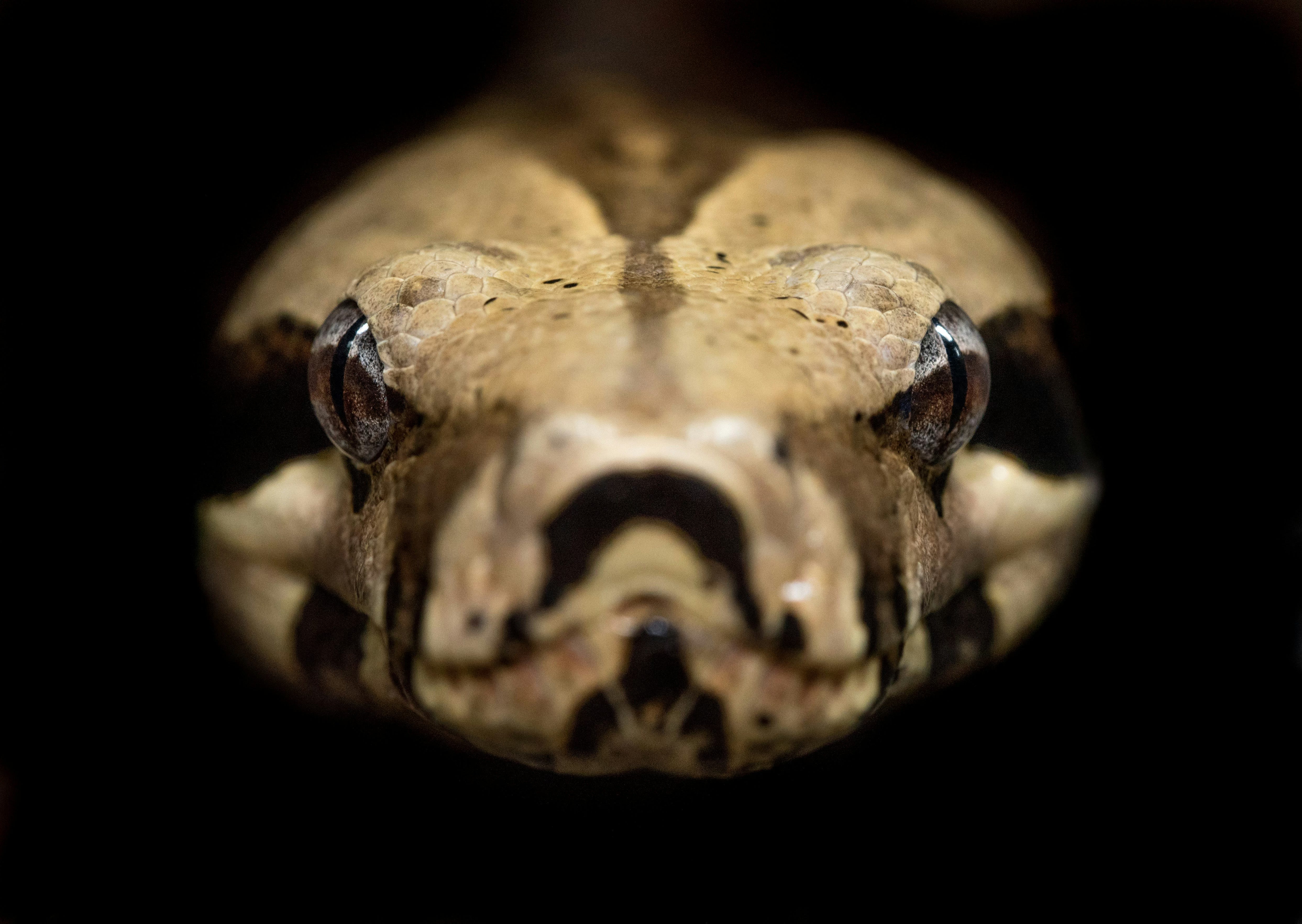
In the monastery of Master Fūgai,1 there was a monk named Tetsudō who served as tenzo, the temple cook. After all, the tenzo is responsible for directing the preparation of the miso soup and side dishes for thirty, fifty, even a hundred people. But one time, in the bowl served to Master Fūgai, something strange had fallen in. When the master looked closely—why, it was the head of a snake.
He flew into a rage and shouted,
“Call Tetsudō here!”
They say Zen monks everywhere wear fierce faces, and this Fūgai was no less fearsome than the rest. When Tetsudō came out after being summoned, the master picked something out of the bowl with his chopsticks—the very thing in question, the snake’s head.
“What’s this?”
Tetsudō took it in his hand. To his surprise, it really was a snake’s head. How in the world it had gotten in there—at this point there was nothing he could do about it.
“Yes, sir—it’s just a piece of yam,” he said, and popped it straight into his mouth.
If he had said, “It’s a snake,” then he could not have fulfilled his duty. His responsibility would have fallen apart. And Master Fūgai, for his part, had been waiting, ready to give him a good scolding when he came. But instead he said, “It’s a yam,” and popped it into his mouth. With that done, there was no way for the master to get angry. He simply went on with his meal in silence. Here lies the true mettle of Tetsudō as tenzo, the monastery cook. He became completely his role.
Become the work you do.
Become yourself.
Right at that point of becoming completely that, there is knowing what is enough.
Only a person who has become completely himself can, for the first time, bring forth the living activity of “the very place where one stands is the place of practice.”
Fūgai Honkō (1779–1847) was a Sōtō Zen monk of the late Edo period. He served as abbot of several temples, including Kōshakuji in Mikawa, and was known for his interest in literati painting influenced by Ike Taiga. Because the seal in his calligraphy resembled an octopus, he was sometimes nicknamed “Tako Fūgai” (“Octopus Fūgai”).